Showing posts with label Monsanto. Show all posts

Monsanto, the TPP and Global Food Dominance


As the Trans-Pacific Partnership negotiations enter their last few days, Ellen Brown exposes their real purpose - corporate control of the world's food, health, environment and financial systems. Of all these, the greatest is food ...


"Control oil and you control nations," said US Secretary of State Henry Kissinger in the 1970s. "Control food and you control the people."

And now global food control has nearly been achieved, by reducing seed diversity with GMO (genetically modified) seeds that are distributed by only a few transnational corporations.

This agenda has been implemented at grave cost to our health. And if the Trans-Pacific Partnership (TPP) passes, control over not just our food but our health, our environment and our financial system will be in the hands of transnational corporations.

[See also "Avaaz TPP petition sabotaged?"]

Profits Before Populations

Genetic engineering has made proprietary control possible over the seeds on which the world’s food supply depends. According to an Acres USA interview of plant pathologist Don Huber, Professor Emeritus at Purdue University, two modified traits account for practically all of the genetically modified crops grown in the world today.

One involves insect resistance. The other, more disturbing modification involves insensitivity to glyphosate-based herbicides (plant-killing chemicals). Often known as Roundup after the best-selling Monsanto product of that name, glyphosate poisons everything in its path except plants genetically modified to resist it.

Glyphosate-based herbicides are now the most commonly used herbicides in the world. Glyphosate is an essential partner to the GMOs that are the principal business of the burgeoning biotech industry. Glyphosate is a 'broad-spectrum' herbicide that destroys indiscriminately, not by killing unwanted plants directly but by tying up access to critical nutrients.

Because of the insidious way in which it works, it has been sold as a relatively benign replacement for the devastating earlier dioxin-based herbicides. But a barrage of experimental data has now shown glyphosate - and the GMO foods incorporating it at high levels - to pose serious dangers to health.

Compounding the risk is the toxicity of so-called 'inert' ingredients used to make glyphosate more potent. Researchers have found, for example, that the surfactant POEA can kill human cells, particularly embryonic, placental and umbilical cord cells. But these risks have been conveniently ignored.

The widespread use of GMO foods and glyphosate herbicides helps explain the anomaly that the US spends over twice as much per capita on healthcare as the average developed country, yet it is rated far down the scale of the world’s healthiest populations. The World Health Organization has ranked the US LAST out of 17 developed nations for overall health.

Sixty to seventy percent of the foods in US supermarkets are now genetically modified. By contrast, in at least 26 other countries - including Switzerland, Australia, Austria, China, India, France, Germany, Hungary, Luxembourg, Greece, Bulgaria, Poland, Italy, Mexico and Russia - GMOs are totally or partially banned; and significant restrictions on GMOs exist in about sixty other countries.

A ban on GMO and glyphosate use might go far toward improving the health of Americans. But the Trans-Pacific Partnership, a global trade agreement for which the Obama Administration has sought Fast Track status, would block that sort of cause-focused approach to the healthcare crisis.

Roundup’s Insidious Effects

Roundup-resistant crops escape being killed by glyphosate, but they do not avoid absorbing it into their tissues. Herbicide-tolerant crops have substantially higher levels of herbicide residues than other crops. In fact, many countries have had to increase their legally allowable levels - by up to 50 times - in order to accommodate the introduction of GM crops.

In the European Union, residues in food are set to rise 100-150 times if a new proposal by Monsanto is approved. Meanwhile, herbicide-tolerant "super-weeds" have adapted to the chemical, requiring even more toxic doses and new toxic chemicals to kill the plant.

Human enzymes are affected by glyphosate just as plant enzymes are: the chemical blocks the uptake of manganese and other essential minerals. Without those minerals, we cannot properly metabolize our food. That helps explain the rampant epidemic of obesity in the United States. People eat and eat in an attempt to acquire the nutrients that are simply not available in their food.

According to researchers Samsell and Seneff in Biosemiotic Entropy: Disorder, Disease, and Mortality (April 2013):

"Glyphosate's inhibition of cytochrome P450 (CYP) enzymes is an overlooked component of its toxicity to mammals. CYP enzymes play crucial roles in biology ... Negative impact on the body is insidious and manifests slowly over time as inflammation damages cellular systems throughout the body.

"Consequences are most of the diseases and conditions associated with a Western diet, which include gastrointestinal disorders, obesity, diabetes, heart disease, depression, autism, infertility, cancer and Alzheimer’s disease."

More than 40 diseases have been linked to glyphosate use, and more keep appearing. In September 2013, the National University of Rio Cuarto, Argentina, published research finding that glyphosate enhances the growth of fungi that produce aflatoxin B1, one of the most carcinogenic of substances.

A doctor from Chaco, Argentina, told Associated Press, "We've gone from a pretty healthy population to one with a high rate of cancer, birth defects and illnesses seldom seen before." Fungi growths have increased significantly in US corn crops.

Glyphosate has also done serious damage to the environment. According to an October 2012 report by the Institute of Science in Society:

"Agribusiness claims that glyphosate and glyphosate-tolerant crops will improve crop yields, increase farmers’ profits and benefit the environment by reducing pesticide use.

Exactly the opposite is the case ... the evidence indicates that glyphosate herbicides and glyphosate-tolerant crops have had wide-ranging detrimental effects, including glyphosate resistant super weeds, virulent plant (and new livestock) pathogens, reduced crop health and yield, harm to off-target species from insects to amphibians and livestock, as well as reduced soil fertility."

Politics Trumps Science

In light of these adverse findings, why have Washington and the European Commission continued to endorse glyphosate as safe? Critics point to lax regulations, heavy influence from corporate lobbyists, and a political agenda that has more to do with power and control than protecting the health of the people.

In the ground-breaking 2007 book Seeds of Destruction: The Hidden Agenda of Genetic Manipulation, William Engdahl states that global food control and depopulation became US strategic policy under Rockefeller protégé Henry Kissinger. Along with oil geopolitics, they were to be the new 'solution' to the threats to US global power and continued US access to cheap raw materials from the developing world.

In line with that agenda, the government has shown extreme partisanship in favor of the biotech agribusiness industry, opting for a system in which the industry 'voluntarily' polices itself. Bio-engineered foods are treated as "natural food additives", not needing any special testing.

Jeffrey M. Smith, Executive Director of the Institute for Responsible Technology, confirms that US Food and Drug Administration policy allows biotech companies to determine if their own foods are safe. Submission of data is completely voluntary. He concludes:

In the critical arena of food safety research, the biotech industry is without accountability, standards, or peer-review. They’ve got bad science down to a science.

Whether or not depopulation is an intentional part of the agenda, widespread use of GMO and glyphosate is having that result. The endocrine-disrupting properties of glyphosate have been linked to infertility, miscarriage, birth defects and arrested sexual development.

In Russian experiments, animals fed GM soy were sterile by the third generation. Vast amounts of farmland soil are also being systematically ruined by the killing of beneficial microorganisms that allow plant roots to uptake soil nutrients.

In Gary Null’s eye-opening documentary Seeds of Death: Unveiling the Lies of GMOs, Dr. Bruce Lipton warns: "We are leading the world into the sixth mass extinction of life on this planet ... Human behavior is undermining the web of life."

The TPP and International Corporate Control

As the devastating conclusions of these and other researchers awaken people globally to the dangers of Roundup and GMO foods, transnational corporations are working feverishly with the Obama administration to fast-track the Trans-Pacific Partnership, a trade agreement that would strip governments of the power to regulate transnational corporate activities.

Negotiations have been kept secret from Congress but not from corporate advisors, 600 of whom have been consulted and know the details. According to Barbara Chicherio in Nation of Change:

"The Trans Pacific Partnership (TPP) has the potential to become the biggest regional Free Trade Agreement in history ...

"The chief agricultural negotiator for the US is the former Monsanto lobbyist, Islam Siddique. If ratified the TPP would impose punishing regulations that give multinational corporations unprecedented right to demand taxpayer compensation for policies that corporations deem a barrier to their profits ...

"They are carefully crafting the TPP to insure that citizens of the involved countries have no control over food safety, what they will be eating, where it is grown, the conditions under which food is grown and the use of herbicides and pesticides."

Food safety is only one of many rights and protections liable to fall to this super-weapon of international corporate control. In an April 2013 interview on The Real News Network, Kevin Zeese called the TPP "NAFTA on steroids" and "a global corporate coup." He warned:

"No matter what issue you care about - whether its wages, jobs, protecting the environment ... this issue is going to adversely affect it ... If a country takes a step to try to regulate the financial industry or set up a public bank to represent the public interest, it can be sued".

Return to Nature: Not Too Late


There is a safer, saner, more earth-friendly way to feed nations. While Monsanto and US regulators are forcing GM crops on American families, Russian families are showing what can be done with permaculture methods on simple garden plots.

In 2011, 40% of Russia’s food was grown on dachas (cottage gardens or allotments). Dacha gardens produced over 80% of the country’s fruit and berries, over 66% of the vegetables, almost 80% of the potatoes and nearly 50% of the nation’s milk, much of it consumed raw. According to Vladimir Megre, author of the best-selling Ringing Cedars Series:

"Essentially, what Russian gardeners do is demonstrate that gardeners can feed the world - and you do not need any GMOs, industrial farms, or any other technological gimmicks to guarantee everybody’s got enough food to eat.

Bear in mind that Russia only has 110 days of growing season per year - so in the US, for example, gardeners’ output could be substantially greater. Today, however, the area taken up by lawns in the US is two times greater than that of Russia’s gardens - and it produces nothing but a multi-billion-dollar lawn care industry."

In the US, only about 0.6 percent of the total agricultural area is devoted to organic farming. This area needs to be vastly expanded if we are to avoid the 'sixth mass extinction'. But first, we need to urge our representatives to stop Fast Track, vote no on the TPP, and pursue a global phase-out of glyphosate-based herbicides and GMO foods.

Our health, our finances and our environment are at stake.

Source: http://www.theecologist.org/News/news_analysis/2188967/monsanto_the_tpp_and_global_food_dominance.html

An Introduction to Organic Farming (And Why We Should Support It)

Image: naturalnews.com

Michael RavensthorpeSpiritfoods

Organic farming is a method of farming that rejects the aggressive machinery and chemicals used by conventional farming in favor of gentle techniques that are in accord with nature. Whereas conventional farmers use mechanical plows to till the soil, for instance, organic farmers prefer to use natural tillers – earthworms and microorganisms – to till the soil for them. And whereas conventional farmers use chemicals to spray the crops, organic farmers prefer to deal with pests using natural repellents.

Though organic farming cannot compare to conventional farming in terms of crop production per area, it surpasses it in all other avenues.

Reasons to Support Organic Farming

Environmentally-friendly – Organic farming methods observe the laws of Nature, are sustainable, and respect the rights of livestock and crops. Using natural farming methods, soil that has been degraded by chemicals, fertilizers, and machinery is healed. Soil ecology becomes balanced once again, and water returns to its natural purity.

Tastier and more nutritious crops – Organically-farmed crops are considerably more nutritious than crops that were modified and sprayed. In some specimens, crude fat, amino acids, protein, and trace minerals were identified to be 300 percent higher than in their non-organic equivalents. This is understandable, since a crop can only provide as many nutrients as the soil in which it grows allows. If the soil has suffered from erosion and its earthworms have been killed by machinery, then it will produce inferior crops.

Respect for life – Organic farmers do not feed their livestock growth hormones, antibiotics, or other poisons that damage the animals’ immune systems and make them more susceptible to disease. Organic farmers also tend to provide their animals with large spaces in which to walk and forage, whereas conventional farmers favor cages or cramped indoor environments.

No chemical fertilizers – Organic farmers do not use chemical fertilizers. Instead, they stick to natural alternatives. For example, fish amino acids provide nitrogen, eggshells provide calcium, and animal bones provide phosphorous. These alternatives are inexpensive as well as effective.

No pesticides or herbicides – Pesticides are used to kill insects that threaten crops. Unfortunately, many sprayed insects find their way into the crops anyway, meaning that the toxic pesticides are passed onto us as well! Therefore, instead of using chemical pesticides, organic farmers use alternatives such as alcohol, light, aromas, and poisonous plants, which do the job just as well. And when it comes to herbicides, most natural farmers don’t use an equivalent at all. Instead, they use the weeds as compost to create ideal growing situations for their crops.

Conclusion

As you can see, the benefits of organic farming are considerable. Conventional farming is not a wise practice; it favors the profits of today over the planet of tomorrow. Eventually, land that was repeatedly farmed using aggressive machinery and toxic chemicals will turn to desert, forcing the farmers to move outwards and degrade other locations like a virus. Organic farming, however, is embraced by farmers who love the land that sustains them and ourselves. Their gentle, natural methods of farming ensure that the soil remains rich, that the insects within it are happy, and that the crops produced are robust and nutritious. Therefore, if you care about your health and the environment, then it is a good idea to support your local organic farms whenever possible!

About the Author

Michael Ravensthorpe is an independent writer whose research interests include nutrition, alternative medicine, and bushcraft. He is the creator of the website Spiritfoods, through which he promotes the world’s healthiest foods.

Source: naturalnews.com

It’s official! Connecticut becomes first state to enact GMO labeling law!

Image: occupy.com

RT.com

The governor of Connecticut hosted a ceremonial signing outside an organic restaurant in the city of Fairfield on Wednesday to commemorate the state’s passing of what could be the first GMO labeling law of its type in the United States.

Voters in Connecticut decided back in June to approve a bill requiring that all foods meant for human consumption that contain genetically-modified ingredients be properly labeled. Unless some neighboring states in the region follow suit, however, the status of that law remains in limbo.

The Connecticut bill requires at least four other Northeastern states with a combined population of no fewer than 20 million to approve similar acts before it can officially go on the books. And while so far proponents of a GMO labeling initiative have found allies in one adjacent state, it could very well be a long-time coming before the proper support is rallied.

Voters in Maine have already elected to pass a near-identical measure, but residents in a region that includes Massachusetts, New Hampshire, New Jersey, New York, Rhode Island and Vermont must come together to do the same in at least three other locales.

Outside the Catch A Healthy Habit restaurant in Fairfield on Wednesday, Gov. Dannel Malloy implored his counterparts to consider joining in their fight.

“I am proud that leaders from each of the legislative caucuses can come together to make our state the first in the nation to require the labeling of GMOs,” Malloy said, according to Fairfield’s Daily Voice. “The end result is a law that shows our commitment to consumers’ right to know while catalyzing other states to take similar action.”

Tara Cook-Littman, the director of GMO Free Connecticut, applauded the efforts by advocates in the state and country working towards new laws.

“As the catalyst for GMO labeling in the United States, Connecticut residents should feel proud,” she told reporters. “We are hopeful that legislators throughout the Northeast will follow the lead of Governor Malloy and all our legislative champions by passing laws that give consumers transparency in labeling. It is a great honor for all of us to stand with Governor Malloy as he signs the first in the nation GMO labeling law.”

More than 60 countries across the world have approved mandatory labeling laws for GMO foods already, and polling suggests that the vast majority of Americans are in favor of doing the same. So far, in fact, almost half of all US states have introduces bill that, if approved, would either require labeling of GMO foods or prohibit them altogether.

“Surveys have always found 80 to 95 percent of people wanting labeling,” Consumers Union senior scientist Michael Hansen told the Rodale News health site back in April. “People are paying attention to food, and because of that they’re more interested in GMO issues and buying food that’s more local and food without pesticides and other added ingredients.”

Now with Connecticut taking the lead, Gov. Malloy hopes other states will do the same.

“This is a beginning, and I want to be clear what it is a beginning of,” he told the Fairfield Citizen before Wednesday’s event. “It is a national movement that will requiring (food) labeling.”

“People need to demand GMO labeling,” Malloy told WFSB News on the day of the ceremonial signing. “Some companies are doing this and we need to move in that direction.”

“This is the time,” he said to the Citizen. “You better get ready; people are coming and this is not a movement you are going to stop.”

Malloy was flanked by state lawmakers from both the right and the left at Wednesday’s event, and Republicans and Democrats alike are now aligning themselves in the fight.

“This bill moves forward and reinforces our fundamental right to know what is in our food so we can make informed choices about what we feed our families,” said Rep. Tony Hwang (R-Fairfield-Trumbull), according to reporter Christina Chiarelli. “Consumers may or may not wish to purchase foods that they know to be genetically modified, but they need the information made available to them to make those informed choices.”

“Passing this bill is courageous and monumental,” added Rep. Philip Miller (D-Essex). “It is an affirmation for healthy, sustainable agriculture and responsible stewardship of our food supply. The ever growing grassroots efforts of Connecticut citizens has come to fruition with the passing of this legislation. I thank Governor Malloy for being a champion of our right to participate in building our economy as fully informed consumers and citizens.”

Currently 15 nations in the European Union require labels on GMO products, and Zambia, Benin and Serbia have all instated prohibitions against products. Just earlier this week, China for the fifth time blocked a cargo shipment of US corn from entering the country, citing concerns of GMO contamination.

Source: RT.com

GMO linked to gluten disorders plaguing 18 million Americans – report

Image: AFP Photo / Khaled Desouki

RT.com

Genetically modified foods such as soy and corn may be responsible for a number of gluten-related maladies including intestinal disorders now plaguing 18 million Americans, according to a new report released on Tuesday.

The report was released by the Institute for Responsible Technology (IRT), and cites authoritative data from the US Department of Agriculture, US Environmental Protection Agency records, medical journal reviews as well as international research.

“Gluten sensitivity can range in severity from mild discomfort, such as gas and bloating, to celiac disease, a serious autoimmune condition that can, if undiagnosed, result in a 4-fold increase in death,” said Jeffrey M. Smith, executive director of IRT in a statement released on their website.

Smith cited how a “possible environmental trigger may be the introduction of genetically modified organisms (GMOs) to the American food supply, which occurred in the mid-1990s,” describing the nine GM crops currently on the market.

In soy, corn, cotton (oil), canola (oil), sugar from sugar beets, zucchini, yellow squash, Hawaiian papaya, and alfalfa, “Bt-toxin, glyphosate, and other components of GMOs, are linked to five conditions that may either initiate or exacerbate gluten-related disorders,” according to Smith.


It’s the BT-toxin in genetically modified foods which kills insects by “puncturing holes in their cells.” The toxin is present in ‘every kernel’ of Bt-corn and survives human digestion, with a 2012 study confirming that it punctures holes in human cells as well.

The GMO-related damage was linked to five different areas: Intestinal permeability, imbalanced gut bacteria, immune activation and allergic response, impaired digestion, and damage to the intestinal wall.

The IRT release also indicated that glyphosate, a weed killer sold under the brand name ‘Roundup’ was also found to have a negative effect on intestinal bacteria. GMO crops contain high levels of the toxin at harvest.

“Even with minimal exposure, glyphosate can significantly reduce the population of beneficial gut bacteria and promote the overgrowth of harmful strains,” the report found.

Dr. Tom O’Bryan, internationally recognized expert on gluten sensitivity and Celiac Disease, says that “the introduction of GMOs is highly suspect as a candidate to explain the rapid rise in gluten-related disorders over the last 17 years.”

Internist, Emily Linder, offered some backup for the report’s findings. She removed GMO from her patients’ diets, finding that recovery from intestinal diseases was faster and more complete.

“I believe that GMOs in our diet contribute to the rise in gluten-sensitivity in the US population,” Linder said in the release.

Source: RT.com

Brazilian Farmers Set to Sue Monsanto for $1 Billion

Image: sustainablepulse.com

Sustainable Pulse

Brazilian farmers are suing Monsanto for allegedly collecting royalties illegally and for forcing farmers to sign “abusive” purchase contracts, GM Watch reported Monday.

In Brazil, farmer-led court actions are piling up against Monsanto for collecting royalties on RR1 soybeans regarded as illegal and for conditioning the sale of new GM seed Intacta RR2 to the signing of a contract seen as abusive, according to an article for Valor Online (Brazil). Lawyers for the farmers and representative bodies estimate the value of the claims against Monsanto at 1.9 billion Brazilian real (about USD 1 billion). Processes have not been completed, but preliminary estimates say the claims may affect the company’s profits.

According to Orlando Julius Caesar, lawyer for the Sinop Rural Union, a settlement reached in a previous lawsuit against Monsanto has resulted in many farmers refusing to buy Monsanto’s seed. “Monsanto is trying to create market rules that do not exist for any other product,” he said.

Article in Portuguese from the Brazilian press: www.isebvmf.com.br/index.php

In October 2013 Judge Alex Nunes Figueiredo, of the Specialized Court for Civil Actions of Mato Grosso/Cuiaba, blocked Monsanto’s attempt to make Brazilian farmers sign restrictive agreements before they can gain access to the company’s new GM seed, RR2 Intacta soybeans.

The background to this story is that last year the Brazilian Supreme Court ruled that Monsanto had collected royalties from farmers illegally for its RR1 soybeans and that the company must refund the farmers.

Monsanto then reached a deal with Famato and other farmers’ unions. The deal was that farmers who wanted to plant RR2 Intacta soybeans would sign an agreement with Monsanto at point of purchase, waiving their rights to a refund of the illegally collected royalties.

Any farmer who signed the agreement would also be signing away other important rights. He would grant Monsanto the right to enter and inspect his property at any time. The farmer would be left completely vulnerable to ANY decisions the company might make, including royalty fee increases or having part of his harvest confiscated – and he would agree not to sue Monsanto at any time. At the same time, the company does not guarantee a yield increase from RR2 Intacta.

The farmer would also agree to “the declaration of principles that recognise the intellectual property rights on agricultural technologies”. This contravenes Brazilian seed law, which protects farmers’ rights to save seed and to use or sell the products of their own cultivation. In short, the agreement put Monsanto’s interests above Brazilian law and deprived farmers of their rights.

In the latest ruling on 11 October, Judge Figueiredo blocked Monsanto’s demands that farmers sign the agreement as a condition to buy RR2. The judge said that Monsanto is unfairly taking advantage of its favorable position in the market as the only technology provider of Intacta RR2, in forcing farmers to “to comply with clauses that are burdensome, if not illegal” as a condition of purchasing the product. In addition, the judge said that Monsanto’s agreement may contravene Brazilian consumer law.

Source: sustainablepulse.com
Follow Sustainable Pulse on Facebook

GMO 'Suicide Seeds' On the Verge of Approval in Brazil Must be Stopped

Image: greenmedinfo.com

GMI Reporter | Green Med Info

After promising on World Food Day (October 16) to block legislation that would legalize the planting of Terminator seeds in Brazil, the country's Judicial Commission is set to approve suicide seeds as a Christmas gift to Monsanto, DuPont and Syngenta.

Intense internal and external pressure in mid-October forced the Brazilian Congress to pull back from adopting pro-Terminator legislation, and the Judicial Commission's Chair pledged never to allow legislation while at his post. Now, the same chair will entertain a motion Wednesday to accept Terminator seeds, making Brazil the first country in the world to defy a 13-year-old UN moratorium on the use of the technology. "If the Commission passes the bill this week," says Centro Ecológico's Maria José Guazzelli, "the Congress could make it law after it reconvenes in February. While most of Brazil is celebrating a Christmas birth, the seed multinationals will be celebrating the death of the 10,000-year right of farmers to save seeds."

If the bill is passed this week (the Judicial Commission meets Wednesday and Thursday), ETC Group expects the Brazilian government to take a series of incremental steps that will orchestrate the collapse of the 193-country consensus moratorium when the UN Convention on Biological Diversity meets for its biennial conference in Korea in October 2014:

First, the government will announce that adoption by the Judicial Commission does not necessarily mean adoption by the Congress. Next, the government will announce that it will limit, through regulation, the application of Terminator technologies to special circumstances and repeat its long-standing support of the UN moratorium. Later, the government will agree that Terminator seeds can be used on GM trees to prevent widespread contamination in the Amazon. This will be described as an environmentally beneficial initiative, disguising the intent to allow the Amazon's biodiversity to be replaced with GM tree plantations.

Monsanto, DuPont and Syngenta – all of whom have pledged to never sell Terminator seeds to farmers – will express their sympathy for the government's difficult situation regarding the spread of GM tree pollen and agree to act responsibly. Although the 3 companies that control 54% of global commercial seed sales all have a stable of Terminator patents, they will move cautiously to multiply Terminator seeds and prepare them for market over the next 2-3 years.

In the meantime, not wanting to be seen as a "rogue state," Brazil will propose to "protect" the Biodiversity Convention's global moratorium by "clarifying language" that will allow states to commercialize Terminator under special conditions such as GM trees or during food security emergencies. This will cue the global seed trade to introduce all of its latest commercial traits only on the Terminator platform – making them available only for seeds that die at harvest time.

The so-called Gene Giants may take advantage of Brazil's clout in the global South to roll out "Terminator Plus" – next generation "zombie" seeds whose sterility can be reversed via a proprietary chemical bath. This combines the maximum biological monopoly with the maximum corporate profit since companies will not even have to multiply and market seed every growing season.

Already, almost 30,000 people in Brazil and around the world have signed a petition* addressed to the Chair of the Judicial Commission reminding him of his promise not to allow suicide seeds and calling upon the government to honor its commitment to the United Nations. Around the world, peasant and civil society organizations are contacting Brazilian embassies to express their alarm.

* The petition is available here http://tinyurl.com/l5y4rj7 (in Portuguese), here http://tinyurl.com/owrgt8c (in English) and here http://goo.gl/KJvVCd(in Spanish).

For non-Portuguese speakers: in order to sign to the petition on change.org, you must enter your first name (Nome), last name (Sobrenome), email address, street address (Endereço), city (Cidade), state (Estado), zip code (CEP); tick the first box if you want to receive mailings from change.org; tick the second box if you want to receive updates on the Terminator issue.

For more information:

Maria José Guazzelli, Centro Ecológico,  mariajose.guazzelli@gmail.com

Tel: 55 54 32331727

Kathy Jo Wetter, ETC Programme Director, kjo@etcgroup.org

Tel: +1-919-688-7302

Pat Mooney, ETC Group Executive Director, etc@etcgroup.org

Tel: +1-613-241-2267

Source: greenmedinfo.com

Leaked Documents Reveal US Diplomats Actually Work for Monsanto


Biotech giant Monsanto has been genetically modifying the world’s food supply and subsequently breeding environmental devastation for years, but leaked documents now reveal that Monsanto has also deeply infiltrated the United States government. With leaked reports revealing how U.S. diplomats are actually working for Monsanto to push their agenda along with other key government officials, Monsanto’s grasp on international politics has never been clearer.

Amazingly, the information reveals that the massive corporation is also intensely involved in the passing and regulations concerning the very GM ingredients they are responsible for. In fact, the information released by WikiLeaks reveals just how much power Monsanto has thanks to key positions within the United States government and elsewhere. Not only was it exposed that the U.S. is threatening nations who oppose Monsanto with military-style trade wars, but that many U.S. diplomats actually work directly for Monsanto.
What the leaked documents reveal — Military style trade wars, government corruption

In 2007 it was requested that specific nations inside the European Union be punished for not supporting the expansion of Monsanto’s GMO crops. The request for such measures to be taken was made by Craig Stapleton, the United States ambassador to France and partner to George W. Bush. Despite mounting evidence linking Monsanto’s GM corn to organ damage and environmental devastation, the ambassador plainly calls for ‘target retaliation’ against those not supporting the GM crop. In the leaked documents, Stapleton states:

“Country team Paris recommends that we calibrate a target retaliation list that causes some pain across the EU since this is a collective responsibility, but that also focuses in part on the worst culprits. The list should be measured rather than vicious and must be sustainable over the long term, since we should not expect an early victory. Moving to retaliation will make clear that the current path has real costs to EU interests and could help strengthen European pro-biotech voices.”

The undying support of key players within the U.S. towards Monsanto is undeniably made clear not only in this release, but in the legislative decisions taken by organizations such as the FDA and USDA. Legislative decisions such as allowing Monsanto’s synthetic hormone Posilac (rBGH) to be injected into U.S. cows despite being banned in 27 countries. How did Monsanto pull this off?

The biotech juggernaut managed to infiltrate the FDA positions responsible for the approval of rBGH, going as far as instating the company’s own Margaret Miller as Deputy Director of Human Safety and Consultative Services. After assuming this position, Miller reviewed her own report on the safety and effectiveness of rBGH.

Many US diplomats pawns of Monsanto’s GM agenda

While it may be shocking to you if you are not familiar with the corrupt influence of Monsanto, the cables also show that many US diplomats are pushing GMO crops as a strategic government and commercial imperative. Interestingly enough, the U.S. focused their efforts toward advisers to the pope specifically, due to the fact that many Catholic figureheads have openly voiced their opposition to GM foods. With this kind of political influence, is it any wonder that many food staples are now predominantly GM? Nearly 93% of U.S. soybeans are heavily modified conservatively, with many other staple crops coming in at similar numbers.

U.S. diplomats have unique opportunities to spread honest and intellectual campagins that can serve to better mankind and end suffering, however they are instead spreading the roots of Monsanto deeper and deeper into international territory. As a substitute for the betterment of mankind, these paid-off diplomats are now spreading environment desecration and health destruction.

As if there wasn’t already enough information to reveal Monsanto’s corruption, the biotech giant also spends enormous amount of money lobbying government each year. Monsanto spent an astonishing $2 million lobbying the federal government in the 3rd quarter of 2011 alone, according to mainstream sources. Why so much cash? The government lobbying focuses on issues like regulations for GM crops and patent reforms. This ‘legal’ form of persuasion is the reason government agencies like the USDA and FDA let Monsanto roam freely.

Satisfying government officials’ financial vested interest is all that matters when dealing with corrupt mega-corporations like Monsanto. As long as these financial ties continue to exist, Monsanto will continue to reign over the food supply and continue to wreak devastation to the environment, ecosystem, and humankind.

Source: http://worldtruth.tv/leaked-documents-reveal-us-diplomats-actually-work-for-monsanto/

The Front Lines of the Label GMO Food Fight Arrive in Oregon

March Against Monsanto in Portland Oregon in May. Image: demotix.com

IsupportOrganic.blogspot.com

After Prop 37's narrow defeat back in 2012 in California largely due to heavy negative ad campaigns funded by Monsanto and Co. and Washington State's close no vote on I 522 after a similar cast of characters used millions in ad spending to defeat the bill, the battle for genetically modified food labeling has now descended upon Oregon.

Activists face a long road ahead of them though, needing to get 87,213 valid signatures by the end of June in order to get the measure on the 2014 Ballot. GMO Free Oregon has taken up the task of spearheading the petitioning and will need all the help they can get. You can support them here: www.gmofreeoregon.org. The March Against Monsanto is leading the national GMO awareness campaign, you can support them here: www.march-against-monsanto.com

FoodDemocracyNow.org has set up a simple way to send an email to Oregon's government to encourage the state to label GMOs, you can do that here.

GM food labeling is important because an overwhelming majority of consumers want to know what's in their food. A recent study showed that babies, still in the womb, are already testing positive for pesticides in their bodies that come from GMO food. There's no telling the effects that these foods are having on us over the long haul, but recent research has shown a vast amount of illnesses, diseases and disorders are likely caused by GMO foods and the extra pesticides used in their production.

Labeling also helps local farmers and organic food companies as more an more consumers become aware of the dangers of the chemicals on their dinner tables. Companies with products labelled non-GMO have seen an explosion of sales once they began using the non-GMO Project's certified label, projected to account for roughly 30% of all foods sold by 2017. According to mnn.com:
"the sales of food with the Non-GMO Project Verified label have risen 21 percent in natural supermarkets over the past twelve weeks (2012). The sales of organic foods have risen 17 percent during the same time period."
The real question is: will the fight for food labeling finally be won by activists in Oregon, or will big money from Monsanto and the other food giants crush the opposition again? Only time will tell.

This article may be copied used freely in part or in whole with credit to IsupportOrganic.blogspot.com and a link to our Facebook page I Want To Be 100% Organic.


Why Monsanto's Roudup is the Most Toxic Chemical in the Environment

Rhonda Burns | GreenMedInfo.com

When one of our world renowned professors uses the term "horrifying" in speaking about the widespread use of a chemical in our food supply, the prudent person would sit up and take notice.

That's exactly the word Dr. Don Huber used. But are we listening? Calling glyphosate "the most toxic chemical we've ever had in our environment, he says that "future historians may well look back upon our time and write, not about how many pounds of pesticides we did or did not apply, but about how willing we were to sacrifice our children and jeopardize future generations for the massive experiment we call genetic engineering that is based on failed promises and flawed science, just to benefit the bottom line of a commercial enterprise."

Dr. Don Huber

In a lecture at the FAMU Center for Viticulture in Tallahassee, Florida, Dr. Don Huber, Professor Emeritus of Plant Pathology at Purdue University, shared his 55 years of experience working with agriculture management practices here in the U.S. and around the world.

One only has to look at the graphs (Dr. Nancy Swanson) which clearly depict a rise in modern disease that mirrors the use of glyphosate in our agriculture system to see the correlation. In addition to the rising rates of cancer, Parkinson's, diabetes, bowel disorders, intestinal infections, dementia, liver and kidney disease, by the year 2025 it is predicted that the autism rate for children will be 1 out of every 2 children born.

Horrifying is indeed the right descriptive.


Glyphosate and Autism

Contrary to the common claim of safety, a large volume of peer-reviewed scientific information clearly demonstrates that genetically engineered products and the Roundup herbicide that 85% of those products were engineered to tolerate are chronically toxic to human and animal tissues and lead to cancer, premature death, kidney and liver failure, blood disorders and a host of other diseases including Morgellan's Disease which was nonexistent prior to the use of glyphosate.

According Dr. Ron Huber, medical data indicates that millions of children and adults are suffering from the chronically toxic GMO products or the glyphosate (Roundup) these plants accumulate. He also stated that MIT scientists documented the biochemical disruption caused by genetic engineering, concluding that glyphosate is the most chronically toxic chemical in our environment. [see study here]

Glyphosate was made in 1964 as a strong metal chelator. In 1970, it was patented as a herbicide. In 2000, it was patented as an antibiotic. 85% of our genetically engineered crops are engineered in order to accept RoundUp herbicide with glyphosate as its primary agent.

The irony is that the promise of higher yield, lower cost crops are empty promises. Reduced root growth, lower nutrient density, greater stress susceptibility and the need for more pesticides are well documented. Sugar beets, for example, require 4X more fungicide after using glyphosate. Soybeans require 2X more water to grow. The crops grown are weaker, more susceptible to disease. It is estimated that if not for federal subsidies (crop insurance) last year, 20% of American farmers would have been bankrupt.

The potential economic impact is devastating on many levels. In two years, we may not have any market for our soybeans in China. The number one reason our exports are rejected today is excessive glyphosate. The number of countries around the world who are refusing to buy our exports is steadily growing.

While 65 countries around the world currently will not accept our GMO crops due to safety concerns, our own country has no such system in place. Instead, States are fighting one by one to at least have labeling laws in place for their citizens.

Here in Florida, Representative Michelle Rehwinkel Vasalinda (Dem) filed the first bill of the 2014 session, House Bill 1, on August 15, 2013 concerning labeling genetically engineered foods (link here). Representative Kathleen Peters (Rep) from the Pinellas County, Florida, is co-sponsoring the bill.

Representative Vasalinda was on hand at Dr. Huber's lecture and stressed the importance of letting our elected officials know how we feel about this issue. She said that it was due to the 1,500+ petitions she received that she even tackled the issue of GMO labeling. Our voices do count, but we have to speak up.

Source: GreenMedInfo.com

Here's Proof Monsanto's Claims That Their GMOs Increase Crop Yields is a Blatant Lie

Image: gmoevidence.com
A new study shows that the US Midwest staple crop system - predominantly genetically modified (GM) - is falling behind other economically and technologically equivalent regions. Western Europe, matched for latitude, season and crop type as well as economic and technological development, outperforms the US (and Canada) with regards to yields, pesticide use, genetic diversity and crop resilience, as well as farm worker wellbeing.

The study, headed by Jack Heinemann at the University of Canterbury, New Zealand, is a damning indictment of the large-scale, monoculture model in the US, the world’s largest producer of maize since the records began in 1961, and is increasingly relied upon to provide more and more of the world’s calorie intake [1]. This serves as a warning to the UK environmental minister Owen Paterson, who proposes to introduce GM crops into the UK [2].

US Midwest and European yields compared

Maize, rapeseed, soybean and cotton yield data were obtained from the United Nations Food and Agriculture organisation (FAO) FAOSTAT database for the United States, Canada and the total group Western Europe (Austrian, Belgium-Luxembourg, France, Germany, Netherlands and Switzerland). Records from 1961 to 2010 were used, while 2011 and 2012 data were included through projections and additional statistics. They conducted statistical covariance (ANCOVA) analyses to test whether the yield differed significantly between locations, year, percentage of GM crops used and any other interactions.
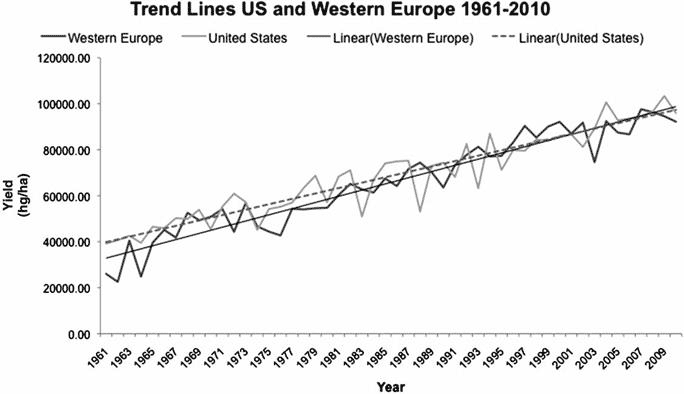
First compared was rapeseed and maize, which have similar agroecosystems (latitude, growing seasons and equally developed agriculture systems across the two continents as well as access to biotechnological and intellectual property (IP) rights options, which are legal protection for so-calledcreations of the mind, allowing industry to own GM seeds through claiming them as novel inventions. The major difference between the continents is the near saturation of GM varieties in N. America compared to a virtual absence in W. Europe. Between 1961 and 1986, the US maize yield averaged

5 700 hectogram/hectare (hg/ha) more than W. Europe, totalling 54 379 hg/ha. (A hectogram = 100 g). However, after 1986, there was a significant change in yield between the compared regions. W. Europe averaged 82 899 hg/ha, slightly more than the 82 841 hg/ha in the US (see Table 1).This suggests that GM has offered no benefit whatsoever in the US – contrary to what has been claimed - while the overall increase in yields in both regions were due to improved management and conventional breeding (see Figure 1).
Table 1 Yield data of maize and rapeseed in the US (and Canada) versus Western Europe
AgroecosystemCropAverage yield (hg/ha)
United States 1961 – 1985
Maize
54,379
Western Europe 1961 – 1985
Maize
48,681
United States 1986 – 2010
Maize
82,841
Western Europe 1986 – 2010
Maize
82,899
Canada 1961 – 1985
Rapeseed
10,489
Western Europe 1961 – 1985
Rapeseed
21,481
Canada 1986 – 2010
Rapeseed
14,588
Western Europe 1986 – 2010
Rapeseed
31,885


Figure 1   Yield data for maize show more improvement and less variability in Europe compared to the US despite Europe’s lack of GM varieties
Further, the difference between the estimated yield potential and the actual yield, or the ‘yield-gap’ appears smaller in Europe. Over the entire period of 1961 to 2010 the US reached marginally significantly higher yield averages, but when taking into account the interaction between year and location, a steeper increase in European maize yield was found in recent years, as consistent with the actually higher yields in Europe than in the US, despite the latter’s use of GM. Yield data from 2011 and projected yields for 2012 reveal a downward trend in the US compared with Europe. Fluctuations in yield are more severe in the US, a sign of reduced resilience to environmental stressors, which can also spark dramatic price changes in agricultural markets.

Rapeseed (or canola) shows a similar pattern when comparing yields from Canada, the next earliest adopter of GM after the US, with W. Europe. The average yield has always been lower in Canada by an average of 11 000 hg/ha during 1961-1985, and an even larger average difference between 1986 and 2010 of 17 300 hg/ha, the period when Canada moved to GM and Europe did not. Wheat yields have consistently increased in both regions, but increasing at a steeper rate in Europe. Neither region grows GM wheat, again highlighting that gains in yields over recent years are not dependent on GM technologies and that the combination of biotechnologies used in Europe is demonstrating greater productivity than in the US.

Low genetic diversity of US crops

Despite its size, the US agro-ecosystem has had very low levels of on-farm genetic diversity, with 80-85 % of maize in the 1980s for example being based on a single innovation – the T cytoplasm. Across the world, the low genetic diversity is a concern, with varieties of many staple crops decreasing in recent years. As FAO pointed out, China went from having 10 000 varieties of wheat in 1949 to 1 000 in the 1970s, while the US has lost 95 % of the cabbage, 91 % of field maize, 94 % of the pea, and 81 % of their tomato varieties in the last century.

Powerful economic and legislative forces continue to drive uniformity. There are two major farming policies in the US that affect sustainability – innovation (through development of licensing and IP rights) and public subsidies. Subsidies increase with higher acreage, promoting monoculture farming. The larger and more uniform the crop, the bigger the cost reduction on pest control, harvesting mechanisation and planting, which has been a major driver of GM crop adoption. With the huge subsidies given to industrial farms, the US is able to sell its staple crops including maize, wheat, sugar and milk at 73, 67, 44 and 61 % of cost price to the world market, which likely undermines the emergence of more sustainable production systems. Historically, low on-farm diversity has led to food production and price uncertainty.

The huge scale of production of staple crops has led to a reduction in seed varieties available to small-scale farmers and poorer farmers, as well as organic farmers. While staple crops are being used on a large-scale for non-food industries, with maize being put into ‘household’ products such as cosmetics and medicines e.g. asparin and deodorant, antibiotics, tobacco, fuel, pastes and adhesives, textiles, building supplies and solvents among other things. The concentrated control of such products by large corporations and companies in these breadbasket regions of the world has far reaching consequences beyond national borders. The US has gone from a system based on public seed saving and exchanges between large and small farmers in the 19th century to one based on strict patents and patent-like protections of varieties, forcing seed saving to disappear. The advent of hybrid varieties in the 1970s which act as a ‘biological patent’, with the next generations seeds not transmitting the commercial traits uniformly, the power of seed control is left in the hands of the commercial breeders, along with the ‘legal patent’ system. This has driven the US industry away from mainly small-scale, specialist breeders to even larger and fewer specialist breeders.  Patents on GM crops are only exaggerating this trend. Seed saving on crops such as soybean was still common until they became available as GM cultivars and came under the control of patents in the 1990s.

Breeder concentration may lead to a loss of agrobiodiversity. The corn leaf blight epidemic of 1970 is a clear example of how the lack of genetic diversity can create a huge risk to food security, revealing the dangers and unsustainability of monoculture practices and genetic uniformity.

What has happened to seed diversity as a result of American agricultural innovations? Using the seed catalogue provided by Monsanto to the US Department of Justice antitrust investigation of the seed industry, Heinemann’s team analysed the number of seed cultivars on offer. They found that the true genetic base of corn was much narrower than the numbers of names and numbers would suggest. One single variety of corn, “Reed Yellow Dent”, contributes to 47 % of the gene pool used for creating hybrid varieties.  The germplasm is limited to around 7 founding inbred lines in the US Maize belt. Similar findings were made for soybean varieties, with a decrease in the number of cultivars by 13 % from the years 2005-2010. A reduction in diversity is consistent with a trend towards reduced yields over the last decade or so, with adverse high temperatures and droughts. Maize and soybean yield predictions for 2012 were the lowest since 2003.

With this worrying trend of reduced yields comes a global increasing dependence on cereal crops for our calorie intake. Though the world produces more calories for food than it did in 1970, the proportion of calories derived from maize grew from 4 % in 1970 to 5 % in 2007. This heavy reliance on a crop that shows the large variability in losses due to biotic and abiotic stresses as highlighted by the authors is a sign of instability and not sustainability. This is in clear contrast to the agro-ecological advances made based on increased on-farm diversity that has seen significant increases in rice yields, reduced pesticide use as well as higher farmer incomes. Intercropping of maize with tobacco, maize with sugarcane, maize with potatoes and wheat with broad beans have all been shown to increase yields of at least one of the crops, or even overall yields as well as reduced disease [3].

Pesticide use higher in US

Pesticide use has increased overall since the introduction of GM crops (see [4] Study Confirms GM Crops Increase Pesticide UseSiS 56), largely a result of the most common GM trait providing tolerance to Monsanto’s herbicide Roundup. Insecticide use has officially gone down slightly, though dwarfed by the increases in herbicide use. This coincides with the introduction of Bt crops genetically engineered to produce an insecticide (which is not included in official ‘pesticides applied’ when insecticide use is analysed). However, Europe also showed a reduction in pesticide use during the same period. In the US in 2007, herbicide use was up by 108 % from 1995 levels, while insecticide use dropped to 85 % of 1995 levels. In Europe however, more impressive reductions were found, with France reducing herbicide use to 94% of 1995 levels and chemical insecticide levels to 24% of 1995 levels. By 2009, herbicide and pesticide use was down to 82 % and 12 % of 1995 levels respectively. Similar trends were seen in Switzerland and Germany.

Farm workers role sacrificed for monoculture farming

Another symptom of the American monoculture farming system is the sacrifice of farm workers. The number of farms has decreased since its peak in 1935, with the loss of 2 million farms by 2007 despite the acreage of the agroecosystem remaining the same to this day. For corn, 69 % is grown by Large or Very Large Farms as defined by the USDA, i.e., having sales in excess of $250 000 and $500 000 respectively. This comes with the inability of farmers to innovate and breed new varieties due to the monopolisation of the seed market and IP patent agreements which have all but abolished public breeding programmes. As the authors state [1]: “Loss of farmer experimentation will likely reduce resilience and adaptation to climate change, natural disasters or as an outcome of conflict.” The GM crop system, with its strict IP patent agreements and commercial development, contributes to the concentration of the seed market, as exemplified by the soybean varieties planted today: 0.5 % of soybean varieties were developed by the public sector in 2007, compared to 70 % in 1980. Seed prices have risen as a result, climbing by 140 % since 1994. With climate change affecting the global yields since the 1980s and 1990s for soybean, there is no evidence that strict IP instruments or biological patents have increased resilience so far.

A warning to the US and the rest of the world

The lessons of the 1972 epidemic of ‘corn leaf blight’ have still not been learnt. The Committee on Genetic Vulnerability of Major Crops at the US National Research Council at the time posed the question: “How uniform genetically are other crops upon which the nation depends, and how vulnerable, therefore, are they to epidemics? The answer is that most major crops are ‘impressively genetically uniform and thus vulnerable and results from government legislative and economic policy’.

The authors recommend important strategies that need to be employed to bring the US back to being one of the largest seed saving and exchange cultures, instead of the current undemocratic and unsustainable system they currently force on farmers in the US and the rest of the world.

Three main suggestions include collection of annual statistics on on-farm genetic diversity along with environmental stress events, to see get a picture of performance resilience. Second, on-farm diversity should be encouraged through policies such as subsidies. Lastly, instead of looking to peak yields of crops, the goal should be to select crops with long-term sustainable yields.

GM crop cultivation, which is an extreme version of industrial farming, is obstructing a shift to more sustainable methods of food production and in addition to reducing yields, is now associated with a plethora of negative human health and environmental impacts as documented in Ban GMOs Now - Special ISIS Report [5]. To increase crop yields, protect the environment and protect the health of citizens across the world, GM crops need to be banned.

References

  1. Heinemann JA , Massaro M, Coray DS, Agapito-Tenfen SZ, Wen JD. Sustainability and innovation in staple crop production in the US Midwest.International Journal of Agricultural Sustainability 2013, http://dx.doi.org/10.1080/14735903.2013.806408
  2. “Owen Paterson: UK must become global leader on GM crops”, Guardian.com http://www.guardian.co.uk/environment/2013/jun/20/owen-paterson-uk-global-leaders-gm-crops 26th June 2013-06-26
  3. Lee EA & Tracy WF. Modern maize breeding. In: J. Bennetzen and S. Hake, eds. Handbook of maize: genetics and genomics. New York, NY: Springer, 141–160
  4. Sirinathsinghji E. Study Confirms GM crops lead to increased Pesticide Use.Science in Society 56, 8-10, 2012
  5. Ho MW & Sirinathsinghji E. Ban GMOs NowHealth and Environmental Hazards Especially in Light of the New Genetics. ISIS Special Report, 2013. http://www.i-sis.org.uk/Ban_GMOs_Now.php