Showing posts with label GMO. Show all posts

In Yet Another Victory for Food Activists, Cheerios Go Non-GMO

Image: flickr.com

GMOInside.org

Consumers across the country took action with the GMO Inside Campaign to push General Mills to make Cheerios non-GMO

WASHINGTON, D.C. –January 2, 2014 – With 40,000 Facebook posts from consumers who took part in GMO Inside’s campaign calling on General Mills to make Cheerios non-GMO (http://gmoinside.org/cheerios/), General Mills today posted  its statement on GMOs http://cheerios.com/en/Articles/cheerios-and-gmos. The company states: “It’s the unique and simple nature of original Cheerios that made this possible – and even that required significant investment over nearly a year,” and “we were able to change how we source and handle ingredients to ensure that the corn starch for original Cheerios comes only from non-GMO corn, and our sugar is only non-GMO pure cane sugar.”

One year ago, in November 2012, GMO Inside starting calling on consumers to put pressure on General Mills to make Cheerios without GMOs due to concerns over the health and environmental impacts of GMOs. Cheerios are a top selling cereal in the U.S. and often one of the first solid foods fed to children.  As soon as the campaign launched, tens of thousands of consumers started flooding Cheerios’ Facebook page with concerned comments regarding GMOs in Cheerios (http://gmoinside.org/launch-gmo-inside-campaign-cheerios/), and used an app put out by Cheerios to spell out anti-GMO messages in the Cheerios font (http://gmoinside.org/cheerios-facebook-page-bombarded-by-anti-gmo-activists/).  In October 2013, GMO Inside issued a real corporate responsibility report for General Mills (http://gmoinside.org/cheerios/), and called on consumers to email and call the General Mills to get GMOs out of Cheerios.  GMO Inside also put out a video highlighting the GMOs in Cheerios:


that was watched by over 200,000 viewers. Over 25,000 people took part in the email actions and calls to the company In the past week callers to the company were told that Cheerios would have a big announcement about GMOs soon.

Green America Corporate Responsibility Director Todd Larsen stated: “Removing GMOs from original Cheerios is an important victory in getting GMOs out of our food supply and an important first step for General Mills.  Original Cheerios in its famous yellow box will now be non-GMO and this victory sends a message to all food companies that consumers are increasingly looking for non-GMO products and companies need to meet that demand.”

John W Roulac, GMO Inside co-founder and co-chair stated: “This is a huge victory for the non-GMO movement. I want to thank all the “GMO Insiders “for using social media to convince America’s largest packed food brand to go non-GMO with a major product. History is being made today and more food brands will rush towards non-GMO foods. ”

GMO Inside, a campaign of national non-profit organization Green America, welcomed the news that General Mills is now producing original Cheerios without GMOs, and is encouraging consumers to let General Mills know that now is the time to make all Cheerios non-GMO.  In addition to original Cheerios, General Mills manufactures 11 other varieties of Cheerios for sale in the U.S., including highly popular Honey Nut Cheerios, and the other 11 varieties continue to include GMOs.  General Mills admits on its website that all Cheerios cereals sold in Europe are made without GMOs, and increasingly, U.S. consumers will be calling on General Mills to make all its cereals non-GMO in the U.S. as well.

Green America is the nation’s leading green economy organization. Founded in 1982, Green America (formerly Co-op America) provides the economic strategies, organizing power and practical tools for businesses, investors, and individuals to solve today’s social and environmental problems.

Media contact: Will Harwood (703) 276-3255 or wharwood@hastingsgroup.com

Source: gmoinside.org

10 Scary Facts About GMOs You Didn't Know About

GMOs (Genetically Modified Organisms), are organisms such as bacteria, fish, insects, mammals, plants and yeast whose genetic makeup has been altered through genetic engineering procedures. Merging DNA from different species, creates unconventional animals, bacteria and plants that are not naturally found in customary crossbreeding or even in nature. The scary facts about GMOs are:

1. Commonality of GMOs

In the United States alone, GMOs make up about 70-80% of the foods we consume. Most foods that contain GMOs are processed foods.

2. The Instability of Health

In most developed countries, GMOs have been banned or placed under strict regulations. After the introduction of GMOs, chronic illnesses, food allergies and disorders like reproductive and digestive ones have increased with time. Although thorough research has yet to be conducted directly linking GMOs to these conditions, some doctors are urging patients to avoid high quantities of foods with GMOs due to its unnatural factors.

3. Resistant to Weeds

Seeds that have been subjected to GMOs are resistant to weeds, but weeds growing in the same areas become exposed to GMOs. Over time, the weeds become resistant as well, causing farmers to use stronger chemicals, which affect the safety of the crops that people consume. More chemicals can lead to more health problems derived from the food we eat.

4. Contaminated—Forever

Not all farmers benefit from GMOs. When seeds are induced with GMOs, they “travel” to other farms and even in the wild making it almost impossible to eliminate all GMOs. Organic farmers face the devastation of huge economic losses trying to keep their crops pure when competing. In addition, the health of future generations are placed at risk due to these “traveling seeds.”

5. Suppressed Information for Cash Crops

Farmers and/or independent scientists, who discover issues with GMOs or attempt to expose the issues, have been attacked, threatened, fired or even denied funding. At the end of the day, it comes down to money. Information that may tamper with the fact that GMOs produce more long-lasting cash crops is concealed.

6. No Labels

Without labels, how are people to know which foods have been genetically modified? Despite an increase for the demand of labels, one of the greatest hazards with genetically modified foods is that there is no legal label requirements to indicate which foods have been altered. Some are labeled with a Non-GMO sticker, but the fact is, a lot of the foods people consume do not have labels so many people are unaware of what they are actually consuming.

7. Unknown Genetic Effects

Because research on GMOs has not been thorough or explicit, the effects that GMOs will have on the greater human race is still unknown. However, considering the health risks of ingesting these types of foods on a regular basis, it is safe to say that GMOs, being unnatural, will have a negative long-term impact on the human race as a whole.

8. GMOs—Not an Excuse for Food Security

Yes, more crops are grown, but at what cost? Powerful monopolies like Monsanto, a genetically engineering company that controls about 90% of the genetically modified foods worldwide are given complete control over the foods we eat. They sell GMO seeds too farmers, which are not inexpensive; therefore, many farmers are forced to purchase the seeds leaving them dependent on major companies or face the vulnerability to hunger.

9. An Unpredictable Aftermath

Exposure to anything that has been genetically modified cannot be considered safe or healthy because it is, well, to put it simply, unnatural! Disturbing the environments natural genetic makeup can eventually result in the reproduction of unnatural animals and plants including humans.

10. A Closed Mouth Does Not Get Fed

One way to help reduce the use of GMOs is to get educated and simply not eat foods that contain it. Patience and portioning are tactics that should be practiced to help eliminate the modifications of our food. GMOs produce more crops versus growing them naturally. Yet, if we allow for crops to grow at their natural rate and portion the foods we eat, a demand to have more than what we actually need will decrease leading to more natural methods to produce our food.

The bottom line is that genetically modified foods are just not natural and have not been proven to be safe. In America, there are not even labels to inform consumers that what they are about to eat has been genetically modified in a lab and not from the earth. Now, that’s scary!

Source: http://www.onegreenplanet.org/vegan-health/10-scary-facts-about-gmos/

An Introduction to Organic Farming (And Why We Should Support It)

Image: naturalnews.com

Michael RavensthorpeSpiritfoods

Organic farming is a method of farming that rejects the aggressive machinery and chemicals used by conventional farming in favor of gentle techniques that are in accord with nature. Whereas conventional farmers use mechanical plows to till the soil, for instance, organic farmers prefer to use natural tillers – earthworms and microorganisms – to till the soil for them. And whereas conventional farmers use chemicals to spray the crops, organic farmers prefer to deal with pests using natural repellents.

Though organic farming cannot compare to conventional farming in terms of crop production per area, it surpasses it in all other avenues.

Reasons to Support Organic Farming

Environmentally-friendly – Organic farming methods observe the laws of Nature, are sustainable, and respect the rights of livestock and crops. Using natural farming methods, soil that has been degraded by chemicals, fertilizers, and machinery is healed. Soil ecology becomes balanced once again, and water returns to its natural purity.

Tastier and more nutritious crops – Organically-farmed crops are considerably more nutritious than crops that were modified and sprayed. In some specimens, crude fat, amino acids, protein, and trace minerals were identified to be 300 percent higher than in their non-organic equivalents. This is understandable, since a crop can only provide as many nutrients as the soil in which it grows allows. If the soil has suffered from erosion and its earthworms have been killed by machinery, then it will produce inferior crops.

Respect for life – Organic farmers do not feed their livestock growth hormones, antibiotics, or other poisons that damage the animals’ immune systems and make them more susceptible to disease. Organic farmers also tend to provide their animals with large spaces in which to walk and forage, whereas conventional farmers favor cages or cramped indoor environments.

No chemical fertilizers – Organic farmers do not use chemical fertilizers. Instead, they stick to natural alternatives. For example, fish amino acids provide nitrogen, eggshells provide calcium, and animal bones provide phosphorous. These alternatives are inexpensive as well as effective.

No pesticides or herbicides – Pesticides are used to kill insects that threaten crops. Unfortunately, many sprayed insects find their way into the crops anyway, meaning that the toxic pesticides are passed onto us as well! Therefore, instead of using chemical pesticides, organic farmers use alternatives such as alcohol, light, aromas, and poisonous plants, which do the job just as well. And when it comes to herbicides, most natural farmers don’t use an equivalent at all. Instead, they use the weeds as compost to create ideal growing situations for their crops.

Conclusion

As you can see, the benefits of organic farming are considerable. Conventional farming is not a wise practice; it favors the profits of today over the planet of tomorrow. Eventually, land that was repeatedly farmed using aggressive machinery and toxic chemicals will turn to desert, forcing the farmers to move outwards and degrade other locations like a virus. Organic farming, however, is embraced by farmers who love the land that sustains them and ourselves. Their gentle, natural methods of farming ensure that the soil remains rich, that the insects within it are happy, and that the crops produced are robust and nutritious. Therefore, if you care about your health and the environment, then it is a good idea to support your local organic farms whenever possible!

About the Author

Michael Ravensthorpe is an independent writer whose research interests include nutrition, alternative medicine, and bushcraft. He is the creator of the website Spiritfoods, through which he promotes the world’s healthiest foods.

Source: naturalnews.com

Why are Russian Scientists Calling for a 10 Year Ban on GMOs?

Image: RIA Novosti / Egor Eremov

Russian scientists are calling for a 10-year moratorium on GMOs to thoroughly study their influence on human health, stressing that such examinations are vital.

"It is necessary to ban GMO, to impose moratorium [on it] for 10 years. While GMO will be prohibited, we can plan experiments, tests, or maybe even new methods of research could be developed,” vice president of Russia’s National Association for Genetic Safety, Irina Ermakova, told Interfax news agency.

According to her, there have not been enough sufficient studies on GMO influence on human health to allow for a wide introduction of genetically modified food on the market.

However, scientists say that most studies prove that such food comes along with dangerous side effects.

“It has been proved that not only in Russia, but also in many other countries in the world, GMO is dangerous. Methods of obtaining the GMO are not perfect, therefore, at this stage, all GMOs are dangerous," Ermakova said.

She went on to explain that one of the techniques uses tumor-causing soil bacteria.

"Consumption and use of GMOs obtained in such way can lead to tumors, cancers and obesity among animals," Ermakova said.

She added that doctors have seen a surge of diabetes and cancer in regions where residents have consumed larger amounts of GMO-containing food.

"Biotechnologies certainly should be developed, but GMO should be stopped. [We] should stop it from spreading,” Ermakova added.

In September, Russia endorsed the Rules for the State Registration of GMO and GMO-containing Products. The law enforces compulsory registration of all products containing GM components.

Also in September, Russian authorities temporarily suspended the import and sale of Monsanto’s genetically modified corn after a French study suggested it may be linked to cancer. Russian Prime Minister Dmitry Medvedev ordered regulatory agencies to consider a possible ban on all GMO imports into Russia.

Source: RT.com

Toxic Pesticides from GMO Food Found in Unborn Babies


Jonathan Cho | Natural News

Medical researchers at the University of Sherbrooke Hospital Centre in Quebec found that toxic pesticides used on genetically modified crops and animal feed entered and remained in the bodies of pregnant women and fed into their unborn babies through the umbilical cord.

Among the sample of pregnant women in the study, 93% tested positive for the pesticides, and 80% tested positive for them in their umbilical cords.  The source of these pesticide residues were determined to be diet, specifically the consumption of conventionally-grown grains, fruits and vegetables, along with meat from livestock fed genetically modified, conventionally-grown feed.

While the researchers did not make definite conclusions about the health consequences of GMOs (genetically modified organisms) and pesticide residue on the women and their babies, GMOs and pesticides have been linked to a plethora of often severe side effects, including birth defects, miscarriages, endocrine system disruptions, allergies, tumors, and cancer.  A study involving the effects of GMO food on rats produced rats with tumors large enough to deform their bodies, visible here, in addition to severe organ damage and premature death.

Sources:
blogs.naturalnews.com

naturalnews.com

telegraph.co.uk

Here's Proof Monsanto's Claims That Their GMOs Increase Crop Yields is a Blatant Lie

Image: gmoevidence.com
A new study shows that the US Midwest staple crop system - predominantly genetically modified (GM) - is falling behind other economically and technologically equivalent regions. Western Europe, matched for latitude, season and crop type as well as economic and technological development, outperforms the US (and Canada) with regards to yields, pesticide use, genetic diversity and crop resilience, as well as farm worker wellbeing.

The study, headed by Jack Heinemann at the University of Canterbury, New Zealand, is a damning indictment of the large-scale, monoculture model in the US, the world’s largest producer of maize since the records began in 1961, and is increasingly relied upon to provide more and more of the world’s calorie intake [1]. This serves as a warning to the UK environmental minister Owen Paterson, who proposes to introduce GM crops into the UK [2].

US Midwest and European yields compared

Maize, rapeseed, soybean and cotton yield data were obtained from the United Nations Food and Agriculture organisation (FAO) FAOSTAT database for the United States, Canada and the total group Western Europe (Austrian, Belgium-Luxembourg, France, Germany, Netherlands and Switzerland). Records from 1961 to 2010 were used, while 2011 and 2012 data were included through projections and additional statistics. They conducted statistical covariance (ANCOVA) analyses to test whether the yield differed significantly between locations, year, percentage of GM crops used and any other interactions.
First compared was rapeseed and maize, which have similar agroecosystems (latitude, growing seasons and equally developed agriculture systems across the two continents as well as access to biotechnological and intellectual property (IP) rights options, which are legal protection for so-calledcreations of the mind, allowing industry to own GM seeds through claiming them as novel inventions. The major difference between the continents is the near saturation of GM varieties in N. America compared to a virtual absence in W. Europe. Between 1961 and 1986, the US maize yield averaged

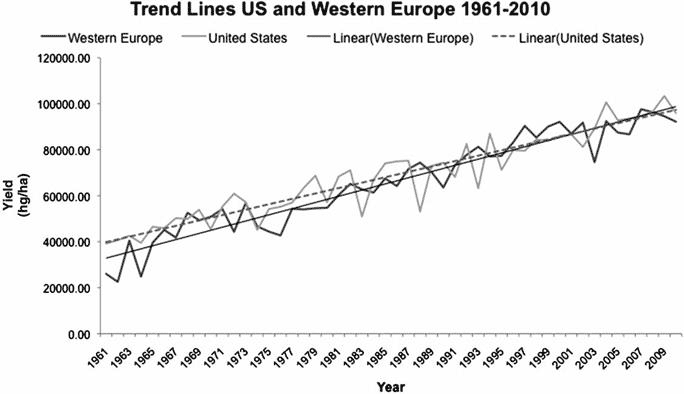
5 700 hectogram/hectare (hg/ha) more than W. Europe, totalling 54 379 hg/ha. (A hectogram = 100 g). However, after 1986, there was a significant change in yield between the compared regions. W. Europe averaged 82 899 hg/ha, slightly more than the 82 841 hg/ha in the US (see Table 1).This suggests that GM has offered no benefit whatsoever in the US – contrary to what has been claimed - while the overall increase in yields in both regions were due to improved management and conventional breeding (see Figure 1).
Table 1 Yield data of maize and rapeseed in the US (and Canada) versus Western Europe
AgroecosystemCropAverage yield (hg/ha)
United States 1961 – 1985
Maize
54,379
Western Europe 1961 – 1985
Maize
48,681
United States 1986 – 2010
Maize
82,841
Western Europe 1986 – 2010
Maize
82,899
Canada 1961 – 1985
Rapeseed
10,489
Western Europe 1961 – 1985
Rapeseed
21,481
Canada 1986 – 2010
Rapeseed
14,588
Western Europe 1986 – 2010
Rapeseed
31,885


Figure 1   Yield data for maize show more improvement and less variability in Europe compared to the US despite Europe’s lack of GM varieties
Further, the difference between the estimated yield potential and the actual yield, or the ‘yield-gap’ appears smaller in Europe. Over the entire period of 1961 to 2010 the US reached marginally significantly higher yield averages, but when taking into account the interaction between year and location, a steeper increase in European maize yield was found in recent years, as consistent with the actually higher yields in Europe than in the US, despite the latter’s use of GM. Yield data from 2011 and projected yields for 2012 reveal a downward trend in the US compared with Europe. Fluctuations in yield are more severe in the US, a sign of reduced resilience to environmental stressors, which can also spark dramatic price changes in agricultural markets.

Rapeseed (or canola) shows a similar pattern when comparing yields from Canada, the next earliest adopter of GM after the US, with W. Europe. The average yield has always been lower in Canada by an average of 11 000 hg/ha during 1961-1985, and an even larger average difference between 1986 and 2010 of 17 300 hg/ha, the period when Canada moved to GM and Europe did not. Wheat yields have consistently increased in both regions, but increasing at a steeper rate in Europe. Neither region grows GM wheat, again highlighting that gains in yields over recent years are not dependent on GM technologies and that the combination of biotechnologies used in Europe is demonstrating greater productivity than in the US.

Low genetic diversity of US crops

Despite its size, the US agro-ecosystem has had very low levels of on-farm genetic diversity, with 80-85 % of maize in the 1980s for example being based on a single innovation – the T cytoplasm. Across the world, the low genetic diversity is a concern, with varieties of many staple crops decreasing in recent years. As FAO pointed out, China went from having 10 000 varieties of wheat in 1949 to 1 000 in the 1970s, while the US has lost 95 % of the cabbage, 91 % of field maize, 94 % of the pea, and 81 % of their tomato varieties in the last century.

Powerful economic and legislative forces continue to drive uniformity. There are two major farming policies in the US that affect sustainability – innovation (through development of licensing and IP rights) and public subsidies. Subsidies increase with higher acreage, promoting monoculture farming. The larger and more uniform the crop, the bigger the cost reduction on pest control, harvesting mechanisation and planting, which has been a major driver of GM crop adoption. With the huge subsidies given to industrial farms, the US is able to sell its staple crops including maize, wheat, sugar and milk at 73, 67, 44 and 61 % of cost price to the world market, which likely undermines the emergence of more sustainable production systems. Historically, low on-farm diversity has led to food production and price uncertainty.

The huge scale of production of staple crops has led to a reduction in seed varieties available to small-scale farmers and poorer farmers, as well as organic farmers. While staple crops are being used on a large-scale for non-food industries, with maize being put into ‘household’ products such as cosmetics and medicines e.g. asparin and deodorant, antibiotics, tobacco, fuel, pastes and adhesives, textiles, building supplies and solvents among other things. The concentrated control of such products by large corporations and companies in these breadbasket regions of the world has far reaching consequences beyond national borders. The US has gone from a system based on public seed saving and exchanges between large and small farmers in the 19th century to one based on strict patents and patent-like protections of varieties, forcing seed saving to disappear. The advent of hybrid varieties in the 1970s which act as a ‘biological patent’, with the next generations seeds not transmitting the commercial traits uniformly, the power of seed control is left in the hands of the commercial breeders, along with the ‘legal patent’ system. This has driven the US industry away from mainly small-scale, specialist breeders to even larger and fewer specialist breeders.  Patents on GM crops are only exaggerating this trend. Seed saving on crops such as soybean was still common until they became available as GM cultivars and came under the control of patents in the 1990s.

Breeder concentration may lead to a loss of agrobiodiversity. The corn leaf blight epidemic of 1970 is a clear example of how the lack of genetic diversity can create a huge risk to food security, revealing the dangers and unsustainability of monoculture practices and genetic uniformity.

What has happened to seed diversity as a result of American agricultural innovations? Using the seed catalogue provided by Monsanto to the US Department of Justice antitrust investigation of the seed industry, Heinemann’s team analysed the number of seed cultivars on offer. They found that the true genetic base of corn was much narrower than the numbers of names and numbers would suggest. One single variety of corn, “Reed Yellow Dent”, contributes to 47 % of the gene pool used for creating hybrid varieties.  The germplasm is limited to around 7 founding inbred lines in the US Maize belt. Similar findings were made for soybean varieties, with a decrease in the number of cultivars by 13 % from the years 2005-2010. A reduction in diversity is consistent with a trend towards reduced yields over the last decade or so, with adverse high temperatures and droughts. Maize and soybean yield predictions for 2012 were the lowest since 2003.

With this worrying trend of reduced yields comes a global increasing dependence on cereal crops for our calorie intake. Though the world produces more calories for food than it did in 1970, the proportion of calories derived from maize grew from 4 % in 1970 to 5 % in 2007. This heavy reliance on a crop that shows the large variability in losses due to biotic and abiotic stresses as highlighted by the authors is a sign of instability and not sustainability. This is in clear contrast to the agro-ecological advances made based on increased on-farm diversity that has seen significant increases in rice yields, reduced pesticide use as well as higher farmer incomes. Intercropping of maize with tobacco, maize with sugarcane, maize with potatoes and wheat with broad beans have all been shown to increase yields of at least one of the crops, or even overall yields as well as reduced disease [3].

Pesticide use higher in US

Pesticide use has increased overall since the introduction of GM crops (see [4] Study Confirms GM Crops Increase Pesticide UseSiS 56), largely a result of the most common GM trait providing tolerance to Monsanto’s herbicide Roundup. Insecticide use has officially gone down slightly, though dwarfed by the increases in herbicide use. This coincides with the introduction of Bt crops genetically engineered to produce an insecticide (which is not included in official ‘pesticides applied’ when insecticide use is analysed). However, Europe also showed a reduction in pesticide use during the same period. In the US in 2007, herbicide use was up by 108 % from 1995 levels, while insecticide use dropped to 85 % of 1995 levels. In Europe however, more impressive reductions were found, with France reducing herbicide use to 94% of 1995 levels and chemical insecticide levels to 24% of 1995 levels. By 2009, herbicide and pesticide use was down to 82 % and 12 % of 1995 levels respectively. Similar trends were seen in Switzerland and Germany.

Farm workers role sacrificed for monoculture farming

Another symptom of the American monoculture farming system is the sacrifice of farm workers. The number of farms has decreased since its peak in 1935, with the loss of 2 million farms by 2007 despite the acreage of the agroecosystem remaining the same to this day. For corn, 69 % is grown by Large or Very Large Farms as defined by the USDA, i.e., having sales in excess of $250 000 and $500 000 respectively. This comes with the inability of farmers to innovate and breed new varieties due to the monopolisation of the seed market and IP patent agreements which have all but abolished public breeding programmes. As the authors state [1]: “Loss of farmer experimentation will likely reduce resilience and adaptation to climate change, natural disasters or as an outcome of conflict.” The GM crop system, with its strict IP patent agreements and commercial development, contributes to the concentration of the seed market, as exemplified by the soybean varieties planted today: 0.5 % of soybean varieties were developed by the public sector in 2007, compared to 70 % in 1980. Seed prices have risen as a result, climbing by 140 % since 1994. With climate change affecting the global yields since the 1980s and 1990s for soybean, there is no evidence that strict IP instruments or biological patents have increased resilience so far.

A warning to the US and the rest of the world

The lessons of the 1972 epidemic of ‘corn leaf blight’ have still not been learnt. The Committee on Genetic Vulnerability of Major Crops at the US National Research Council at the time posed the question: “How uniform genetically are other crops upon which the nation depends, and how vulnerable, therefore, are they to epidemics? The answer is that most major crops are ‘impressively genetically uniform and thus vulnerable and results from government legislative and economic policy’.

The authors recommend important strategies that need to be employed to bring the US back to being one of the largest seed saving and exchange cultures, instead of the current undemocratic and unsustainable system they currently force on farmers in the US and the rest of the world.

Three main suggestions include collection of annual statistics on on-farm genetic diversity along with environmental stress events, to see get a picture of performance resilience. Second, on-farm diversity should be encouraged through policies such as subsidies. Lastly, instead of looking to peak yields of crops, the goal should be to select crops with long-term sustainable yields.

GM crop cultivation, which is an extreme version of industrial farming, is obstructing a shift to more sustainable methods of food production and in addition to reducing yields, is now associated with a plethora of negative human health and environmental impacts as documented in Ban GMOs Now - Special ISIS Report [5]. To increase crop yields, protect the environment and protect the health of citizens across the world, GM crops need to be banned.

References

  1. Heinemann JA , Massaro M, Coray DS, Agapito-Tenfen SZ, Wen JD. Sustainability and innovation in staple crop production in the US Midwest.International Journal of Agricultural Sustainability 2013, http://dx.doi.org/10.1080/14735903.2013.806408
  2. “Owen Paterson: UK must become global leader on GM crops”, Guardian.com http://www.guardian.co.uk/environment/2013/jun/20/owen-paterson-uk-global-leaders-gm-crops 26th June 2013-06-26
  3. Lee EA & Tracy WF. Modern maize breeding. In: J. Bennetzen and S. Hake, eds. Handbook of maize: genetics and genomics. New York, NY: Springer, 141–160
  4. Sirinathsinghji E. Study Confirms GM crops lead to increased Pesticide Use.Science in Society 56, 8-10, 2012
  5. Ho MW & Sirinathsinghji E. Ban GMOs NowHealth and Environmental Hazards Especially in Light of the New Genetics. ISIS Special Report, 2013. http://www.i-sis.org.uk/Ban_GMOs_Now.php

Everything We've Been Told About GMOs Has Been a Lie

Tom Laskawy | Grist.org

Image: csglobe.com
What if the agricultural revolution has already happened and we didn’t realize it? Essentially, that’s the idea in this report from the Guardian about a group of poverty-stricken Indian rice and potato farmers who harvested confirmed world-record yields of rice and potatoes. Best of all: They did it completely sans-GMOs or even chemicals of any kind.
"[Sumant] Kumar, a shy young farmer in Nalanda district of India’s poorest state Bihar, had — using only farmyard manure and without any herbicides — grown an astonishing 22.4 tonnes of rice on one hectare [~2.5 acres] of land. This was a world record and with rice the staple food of more than half the world’s population of seven billion, big news.
It beat not just the 19.4 tonnes achieved by the “father of rice”, the Chinese agricultural scientist Yuan Longping, but the World Bank-funded scientists at the International Rice Research Institute in the Philippines, and anything achieved by the biggest European and American seed and GM companies. And it was not just Sumant Kumar. Krishna, Nitish, Sanjay and Bijay, his friends and rivals in Darveshpura, all recorded over 17 tonnes, and many others in the villages around claimed to have more than doubled their usual yields."
Another Bihar farmer broke India’s wheat-growing record the same year. They accomplished all this without GMOs or advanced seed hybrids, artificial fertilizer or herbicide. Instead, they used a technique called System of Rice [or root] Intensification (SRI). It’s a technique developed in Madagascar in the 1980s by a French Jesuit and then identified and promulgated by Cornell political scientist and international development specialist Norman Uphoff.

RELATED: Here's Proof Monsanto's Claims That Their GMOs Increase Crop Yields is a Blatant Lie

SRI for rice involves starting with fewer, more widely spaced plants; using less water; actively aerating the soil; and applying lots of organic fertilizer. According to Uphoff’s SRI Institute website [PDF], the farmers who use synthetic fertilizer with the technique get lower yields than those who farm organically. How’s that for pleasant irony? Brothers Mohen Singh and Raj Narayin Singh in their wheat field in Bihar. Petr Kosina / CIMMYTBrothers Mohen Singh and Raj Narayin Singh in their wheat field in Bihar.

International Attention

The breadth of the results in Bihar have gotten international attention. The Guardian reports that economist Joseph Stieglitz, a Nobel laureate and international development aficionado, visited the area last month. After seeing their amazing results, he declared the farmers “better than scientists.”

High praise aside, the technique is not without its detractors. Most western governments and agricultural scientists remain skeptical of the practice: Many challenge that the reported yields aren’t verified, there’s insufficient science behind the technique, and they worry it can’t scale to larger farms.

Achim Dobermann, deputy director of worldwide standard-bearers the International Rice Research Institute (IRRI), dismissed the technique in comments to the Guardian:
"SRI is a set of management practices and nothing else, many of which have been known for a long time and are best recommended practice … Scientifically speaking I don’t believe there is any miracle. When people independently have evaluated SRI principles then the result has usually been quite different from what has been reported on farm evaluations conducted by NGOs and others who are promoting it. Most scientists have had difficulty replicating the observations."

Given the paucity — or total absence — of independent testing done on GMOs and pesticides developed by companies like Monsanto and Syngenta, it’s galling to read of scientists complaining “there is not enough peer-reviewed evidence around SRI” and that “it is impossible to get such returns.”

Here’s where the potential conflicts of interest crop up: The IRRI is currently involved in developing GMO rice as a core component of a campaign to increase yields worldwide. This doesn’t entirely invalidate its position on SRI, but it points to the ideological divide in agriculture between those who believe in technology as the only solution to “feeding the world” and those who put faith in non-technological, agro-ecological techniques to accomplish the same.

(It’s also worth noting that the regions in India that invested heavily in Monsanto’s GMO RoundUp Ready cotton seeds are seeing yields collapse; Monsanto blames the crop failure on farmers. Grist reported recently on the even deeper tragedy many of these farmers are experiencing.)

Much of this divide comes from a belief among many scientists and most western governments that the developing world must adopt western-style industrial ag techniques in order to produce enough food. But that view is a fantasy: Even today, as the Guardian article observes, 93 percent of Bihar’s 100 million residents are subsistence farmers.

It’s delusional to expect that Bihar and the vast populations of Africa, Indonesia, and China will transform into western-style economies with western-style population distributions. Billions of people across the globe will remain subsistence farmers far into the future; what they require are farming techniques that can improve yields even modestly. Forcing regions that don’t have passable roads (much less electrification) to rely on the grace of multinational organizations to supply seeds, fertilizers, and chemicals seems borderline criminal.

SRI As An Alternative

SRI appears to offer an acceptable alternative for a variety of crops, including rice, potatoes, wheat, corn, beans, eggplant, onions, carrots, sugar cane, and even tomatoes.
For many westerners, including many western journalists, it’s difficult to separate the concept of “progress” from its inevitable modifier, “technological.” SRI may not be technology-based, but it’s science-based and sophisticated. It’s also continually field tested and improved through farmers’ own feedback. It’s exactly the kind of flexible, responsive system you’d demand from any truly sustainable agriculture — as opposed to the regimented, top-down application of chemical- and biotech-based approaches.

Plain old western snobbery shouldn’t be discounted, either. As agronomist Anil Verma put it in the Guardian article:
"If any scientist or a company came up with a technology that almost guaranteed a 50% increase in yields at no extra cost they would get a Nobel prize. But when young Biharian farmers do that they get nothing."
Does SRI need more research? Absolutely. Can it be adapted to large-scale monocrop agriculture? Probably not. But that’s exactly the kind of agriculture that’s failing us and needs to be reassessed entirely.

Where does SRI go from here? In India, at least, Bihar alone is investing $50 million in expanding adoption. However, the Guardian reports that “Western governments and foundations are holding back, preferring to invest in hi-tech research.”

Meanwhile, Monsanto shows no signs of slowing down: Indications are that it will win its patent case before the Supreme Court and gain virtual total control of its seeds. This will enable it to continue charging inflated prices for a technology that provides modest yield increases, if any, and certainly nothing close to the 30-percent increase many agronomists are praying for.

It’s always possible we’ll wake up to the successes being pioneered by the unlikeliest of subjects — subsistence farmers in the far east. Until then, Monsanto’s technology-driven vision of agriculture is winning here in the west.

Sources:

grist.org
theguardian.com

Canada Approves World's First Genetically Modified Salmon Destined For Consumption In The U.S.

Marco Torres | Prevent Disease

Image: preventdisease.com
It seems the level of corruption at the hands of politicians and power hungry investors is no different in Canada than anywhere else in the world. Environment Canada has approved the commercial production of GM Atlantic salmon eggs which grow to market-size twice as fast as other farmed salmon. The biotech company responsible, Aquabounty, has revealed that it is no longer asking for approval to grow the fish in the US but plans to produce all of the GM salmon eggs in Canada and then sell “table-ready” GM salmon into the US consumer market. It is an alarming decision that sets Canada up to be the source of global environmental risk, says the Canadian Biotechnology Action Network.

A U.S. company who has lobbied to commercially produce genetically modified salmon eggs in Canada says it has cleared a major hurdle in its proposal to make the fish available for human consumption, a possibility that has critics worried about the prospect of "frankenfish" escaping and endangering wild Atlantic salmon around the world.

The Environment Canada approval is the first government approval for the company AquaBounty. The company has asked for approval of the GM Atlantic salmon for human consumption in the U.S., based on a plan to produce the GM fish eggs in Prince Edward Island (PEI), Canada and ship them to Panama for grow-out and processing.

“We’re devastated that Prince Edward Island is now officially the home of the Frankenfish,” said Leo Broderick of the Prince Edward Island (PEI) group called Islanders Say No to Frankenfish, “We don’t want our Island to be the source of this dangerous living pollution.”

Environment Canada's conclusion is that the eggs are not harmful to the environment or human health when produced in contained facilities.

Yet experts from the Canadian Biotechnology Action Network are strongly opposed indicating the decision sets a precedent that endangers the future of salmon. “We are extremely disappointed and alarmed that our government has approved the production of GM fish eggs. GM salmon egg production in Canada endangers the future of wild Atlantic salmon around the world,” said Lucy Sharratt of the Canadian Biotechnology Action Network. “It's simply crazy that the world’s first GM fish eggs are now going to be coming from Canada.”

"This is a concrete environmental risk now that's coming directly from Canada," Sharratt said.

She said Ottawa's decision is a surprise given that federal officials hadn't indicated publicly that a review was underway.

"The announcement is a huge surprise in that even after repeated requests (for information) we were never told that this decision was even being taken."

In an email, Environment Canada said the decision was made by departmental scientists "based on a thorough scientific evaluation of the latest evidence and studies." The department also said that the federal government has effective regulations in place to protect the environment and human health from potentially adverse effects of genetically engineered organisms in Canada.

Stotish said Aquabounty's proposal was subject to a risk assessment conducted by Fisheries and Oceans Canada involving a panel of independent experts in transgenics and fish containment technology.
Aquabounty's plans have drawn opposition from some state lawmakers in the U.S. as well including Alaska, and from environmental groups who fear that the genetically modified fish could escape their onshore farms and put wild populations at risk.

In February, the public response was so strong that the U.S. Food and Drug Administration announced it was extending its comments period on its preliminary assessments of the fish, which found they posed no significant environmental impact.

“This isn’t the international image we want for our beautiful Island,” said Broderick.

Just last week, on November 21, an environmental group in Panama filed a complaint alleging that AquaBounty’s research and development of the GM fish, using eggs sent from PEI, was not in compliance with national and international environmental regulations.

AquaBounty is headquartered in the U.S. but the GM salmon is based on a gene construct patented by two Canadian university professors. The company also has research facilities in Prince Edward Island where it grows GM fish for experimentation and testing. The company recently revealed that it is not actually asking for approval to grow the fish in the US but plans to produce all of the GM salmon eggs on PEI, ship the eggs to Panama for growing out and processing, and then sell “table-ready” GM salmon into the US consumer market.

Just two years ago a Purdue University scientist urged federal officials to decide favorably on allowing genetically engineered salmon into the food supply arguing that not doing so may set back scientific efforts to increase food production. The argument came in direct contradiction to statements made by the same scientist who found that releasing a transgenic fish to the wild could damage native populations even to the point of extinction.

Marcus Sheldon who operates a conventional fish farm in B.C says that genetically modified salmon could accelerate toxicity levels. "That's just not natural," said Sheldon. "Twice the growth is likely twice the toxicity as well if you consider artificially inflated hormonal levels which we don't know the long term effects of."

No One Wants GM Fish

The aquaculture industry does not support the commercialization of GM fish and has stated that there is no market demand. Across North America, grocery stores are now pledging not to use GM seafood.

The first GM Food Animal in the World?

The GM fish was in a race with the GM pig called “Enviropig” to become the first genetically engineered animal in our food system but the campaign led by the Canadian Biotechnology stopped the GM pig in March 2012, making GM salmon the first commercially available animal for human consumption.
Critics have long warned that the process of genetic engineering itself could possibly result in increased allergenicity and AquaBounty’s own data point to this potential in their GM salmon.

Dr. Michael Hansen, Senior Scientist at Consumers Union US, says, “The FDA is relying on woefully inadequate data. There is sloppy science, small sample sizes, and questionable practices.” For example, the company used insensitive tests to try and measure the levels of growth hormone in the GM salmon and the levels of IGF-1, a hormone linked to a number of cancers.

Sources:
cban.ca
preventdisease.com
montrealgazette.com

Marco Torres is a research specialist, writer and consumer advocate for healthy lifestyles. He holds degrees in Public Health and Environmental Science and is a professional speaker on topics such as disease prevention, environmental toxins and health policy.

Source: preventdisease.com

This "Miracle Health Food" Has Been Linked Brain Damage and Breast Cancer


Mercola.com

Image: commons.wikimedia.org
If you were to carefully review the thousands of studies published on soy, I strongly believe you would reach the same conclusion as I have—which is, the risks of consuming unfermented soy products FAR outweigh any possible benefits.

Notice I said unfermented soy products.

For centuries, Asian people have been consuming fermented soy products such as natto, tempeh, and soy sauce, and enjoying the health benefits. Fermented soy does not wreak havoc on your body like unfermented soy products do.

Unfortunately, many Americans who are committed to healthy lifestyles have been hoodwinked and manipulated into believing that unfermented and processed soy products like soymilk, soy cheese, soy burgers and soy ice cream are good for them.

How Did Soy Foods Become So Popular?


If it seems like soy foods appeared out of nowhere to be regarded as the “miracle health food” of the 21st Century, it’s because they did.

From 1992 to 2006, soy food sales increased from $300 million to nearly $4 billion, practically overnight, according to the Soyfoods Association of North America. This growth came about due to a massive shift in attitudes about soy. And this shift was no accident—it was the result of a massive investment in advertising by the soy industry that’s been wildly successful.

Soy is indeed big business, very big business.

From 2000 to 2007, U.S. food manufacturers introduced more than 2,700 new soy-based foods, and new soy products continue to appear on your grocer’s shelves.

According to the survey Consumer Attitudes About Nutrition 2008 (by the United Soybean Board):

  • -As of 2007, 85 percent of consumers perceive soy products as healthful
  • -33 percent of Americans eat soy foods or beverages at least once a month
  • -70 percent of consumers believe soybean oil is good for them
  • -84 percent of consumers agree with the FDA’s claim that consuming 25 grams of soy protein daily reduces your risk of heart disease

This is a tragic case of shrewd marketing and outright lies taking root among the masses with the end result of producing large profits for the soy industry and impaired health for most who have been deceived into using unfermented soy long-term.
.
As you can see from the extensive list of articles below, there is a large amount of scientific research showing that soy is not the nutritional panacea of the 21st Century.

The Dark Side of Soy

The vast majority of soy at your local market is not a health food. The exception is fermented soy, which I’ll explain more about later and even worse GMO soy that is contaminated with large pesticide residues as the reason it is GMO is so they can spray the potent toxic herbicide Roundup on them to improve crop production by killing the weeds.

Unlike the Asian culture, where people eat small amounts of whole non-GMO soybean products, western food processors separate the soybean into two golden commodities—protein and oil. And there is nothing natural or safe about these products.

Dr. Kaayla Daniel, author of The Whole Soy Story, points out thousands of studies linking soy to malnutrition, digestive distress, immune-system breakdown, thyroid dysfunction, cognitive decline, reproductive disorders and infertility—even cancer and heart disease.

Here is just a sampling of the health effects that have been linked to soy consumption:

  • -Breast cancer
  • -Brain damage
  • -Infant abnormalities
  • -Thyroid disorders
  • -Kidney stones
  • -Immune system impairment
  • -Severe, potentially fatal food allergies
  • -Impaired fertility
  • -Danger during pregnancy and nursing

Soy proponents will argue that soy-based foods (they lump the fermented ones with the unfermented) will protect you from everything from colon, prostate and breast cancer to strokes, osteoporosis, and asthma.
But said enthusiasts never mention the studies that illuminate soy’s downside and all of the dangers posed to your health, which are based on sound research.

Another unfortunate fact is that 80 percent of the world’s soy is used in farm animal feed, which is why soy production is contributing to deforestation. Some soy propagandists have suggested that the solution to this is for all of us to become vegetarians—a reckless recommendation rooted in total ignorance about nutrition—whereas a far better solution is a major overhaul in how farm animals are fed and raised.

What Makes Soy Such a Risky Food to Eat?

Here is a summary of soy’s most glaring problems.

91 percent of soy grown in the US is genetically modified (GM).  The genetic modification is done to impart resistance to the toxic herbicide Roundup. While this is meant to increase farming efficiency and provide you with less expensive soy, the downside is that your soy is loaded with this toxic pesticide. The plants also contain genes from bacteria that produce a protein that has never been part of the human food supply. GM soy has been linked to an increase in allergies. Disturbingly, the only published human feeding study on GM foods ever conducted verified that the gene inserted into GM soy transfers into the DNA of our gut bacteria and continues to function. This means that years after you stop eating GM soy, you may still have a potentially allergenic protein continuously being produced in your intestines.Even more frightening is the potential for GM soy to cause infertility in future generations, which has been evidenced by recent Russian research.

Soy contains natural toxins known as “anti-nutrients. “Soy foods contain anti-nutritional factors such as saponins, soyatoxin, phytates, protease inhibitors, oxalates, goitrogens and estrogens. Some of these factors interfere with the enzymes you need to digest protein. While a small amount of anti-nutrients would not likely cause a problem, the amount of soy that many Americans are now eating is extremely high.

Soy contains hemagglutinin. Hemagglutinin is a clot-promoting substance that causes your red blood cells to clump together. These clumped cells are unable to properly absorb and distribute oxygen to your tissues.
Soy contains goitrogens Goitrogens are substances that block the synthesis of thyroid hormones and interfere with iodine metabolism, thereby interfering with your thyroid function.

Soy contains phytates. Phytates (phytic acid) bind to metal ions, preventing the absorption of certain minerals, including calcium, magnesium, iron, and zinc — all of which are co-factors for optimal biochemistry in your body. This is particularly problematic for vegetarians, because eating meat reduces the mineral-blocking effects of these phytates (so it is helpful—if you do eat soy—to also eat meat).

Soy is loaded with the isoflavones genistein and daidzein Isoflavones are a type of phytoestrogen, which is a plant compound resembling human estrogen. These compounds mimic and sometimes block the hormone estrogen, and have been found to have adverse effects on various human tissues. Soy phytoestrogens are known to disrupt endocrine function, may cause infertility, and may promote breast cancer in women. Drinking even two glasses of soy milk daily for one month provides enough of these compounds to alter your menstrual cycle. Although the FDA regulates estrogen-containing products, no warnings exist on soy.
Soy has toxic levels of aluminum and manganese Soybeans are processed (by acid washing) in aluminum tanks, which can leach high levels of aluminum into the final soy product. Soy formula has up to 80 times higher manganese than is found in human breast milk.

Soy infant formula puts your baby’s health at risk.Nearly 20 percent of U.S. infants are now fed soy formula, but the estrogens in soy can irreversibly harm your baby’s sexual development and reproductive health. Infants fed soy formula take in an estimated five birth control pills’ worth of estrogen every day.Infants fed soy formula have up to 20,000 times the amount of estrogen in circulation as those fed other formulas!
There is also the issue of pesticides and genetic modification.

Soy foods are both heavily sprayed with pesticides and genetically modified (GM). More than 80 percent of the soy grown in the United States is GM. And more than 90 percent of American soy crops are GM.
Since the introduction of GM foods in 1996, we’ve had an upsurge in low birth weight babies, infertility, and other problems in the U.S. population, and animal studies thus far have shown devastating effects from consuming GM soy.

You may want to steer clear of soy products for no other reason than a commitment to avoiding GM foods… unless you wish to be a lab animal for this massive uncontrolled experiment by the biotech industry.

What Soy Products are Good For You?

I want to be clear that I am not opposed to all soy. Soy can be incredibly healthful, but ONLY if it is organic and properly fermented.

After a long fermentation process, the phytate and “anti-nutrient” levels of soybeans are reduced, and their beneficial properties become available to your digestive system.

You may have heard that Japanese people live longer and have lower rates of cancer than Americans because they eat so much soy—but it’s primarily fermented soy that they consume, and it’s always been that way. Fermented soy products are the only ones I recommend consuming.

These are the primary fermented soy products you’ll find:

  • -Tempeh a fermented soybean cake with a firm texture and nutty, mushroom-like flavor.
  • -Miso, a fermented soybean paste with a salty, buttery texture (commonly used in miso soup).
  • -Natto, fermented soybeans with a sticky texture and strong, cheese-like flavor.
  • -Soy sauce, which is traditionally made by fermenting soybeans, salt and enzymes; be wary because many varieties on the market today are made artificially using a chemical process.

Please note that tofu is NOT on this list. Tofu is not fermented, so is not among the soy foods I recommend.
Source: Mercola.com via rawforbeauty.com